On the second day of our Kansai trip, my family visited Lake Biwa in Shiga Prefecture, then stopped by the peaceful village of Ohara before heading into downtown Kyoto. Both Lake Biwa and Ohara are easy day-trip destinations from Kyoto, so if your schedule allows, it’s definitely worth spending half a day exploring these scenic spots.

Lake Biwa – A Lake as Vast as the Sea
Lake Biwa is the largest lake in the Japanese archipelago, covering an impressive 670 km² — that’s actually bigger than the entire city of Seoul or even Tokyo’s 23 wards!
That said, Lake Biwa isn’t the most exciting place to visit on a rainy day… When it rains, there really isn’t much to see. Unfortunately, we went on one of those wet, gloomy days — so the view was, well, pretty underwhelming.
This is what I was hoping to see…

But in reality… it looked more like this. Gray skies, drizzle, and not much of a view. Honestly, there’s no real reason to visit Lake Biwa on a rainy day.

If you’re planning to stay near Lake Biwa for a night, I found a lovely guesthouse I’d highly recommend: Ōtsu Guesthouse Seiseki (大津ゲストハウス 栖碩 Seiseki). It’s a cozy spot that runs as a café during the day and a guesthouse at night — pretty unique, right? The whole building is rented out privately, so it’s perfect for families of four or larger groups of six or more.
When I booked it on Booking.com, I was a bit nervous since there weren’t many reviews. But once we arrived, I was pleasantly surprised — the place was spotless, well-equipped, and thoughtfully designed. The traditional tatami-style rooms have been beautifully renovated with a modern touch, creating a rare blend of classic Japanese charm and contemporary comfort.


The guesthouse is about a 10-minute walk from JR Ōtsu Station, tucked away in a quiet residential neighborhood. The peaceful atmosphere is nice, but the downside is that there aren’t many convenience stores or restaurants nearby.
That said, the kitchen is fully equipped, so I’d recommend bringing some groceries when you check in — cooking your own meal inside can actually be a really cozy and fun experience! 🍳🏡
Ohara Village – Kyoto’s Hidden Gem
Ohara is a small, peaceful village located about an hour to an hour and a half north of central Kyoto. You can get there directly from Kyoto Station by taking Bus No. 17, which makes it an easy (though slightly long) ride.
Since the round trip takes over two hours, it’s best to set aside at least half a day for your visit. I’d especially recommend Ohara if you’re spending three or more days in Kyoto or if this is your second time exploring the city — it’s a perfect off-the-beaten-path destination for those who’ve already seen the main sights.
Sanzen-in Temple – The Enchanting Moss Garden
The most famous spot in Ohara is Sanzen-in Temple, known for its lush moss gardens and breathtaking autumn foliage. In spring and summer, the grounds are filled with vibrant shades of green, while in autumn the temple transforms into a stunning sea of red and gold leaves.
The entrance fee is 700 yen per adult, which is a little pricier than most temples in central Kyoto — but once you step inside, you’ll understand why it’s worth it.
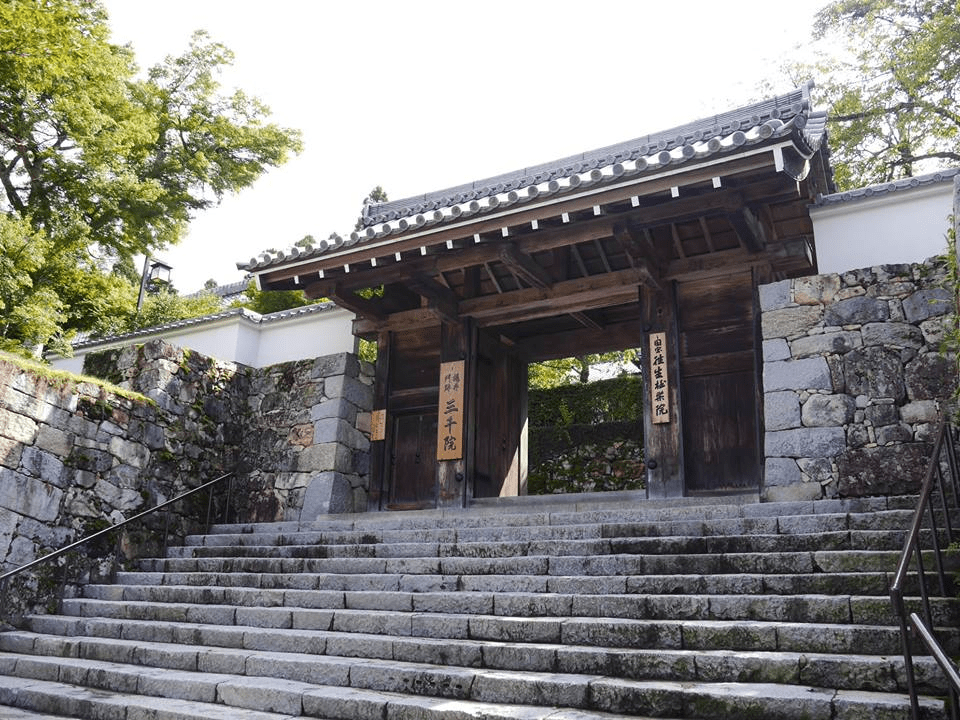
As you step inside the temple and walk along the long wooden corridors, slowly making your way around the halls…

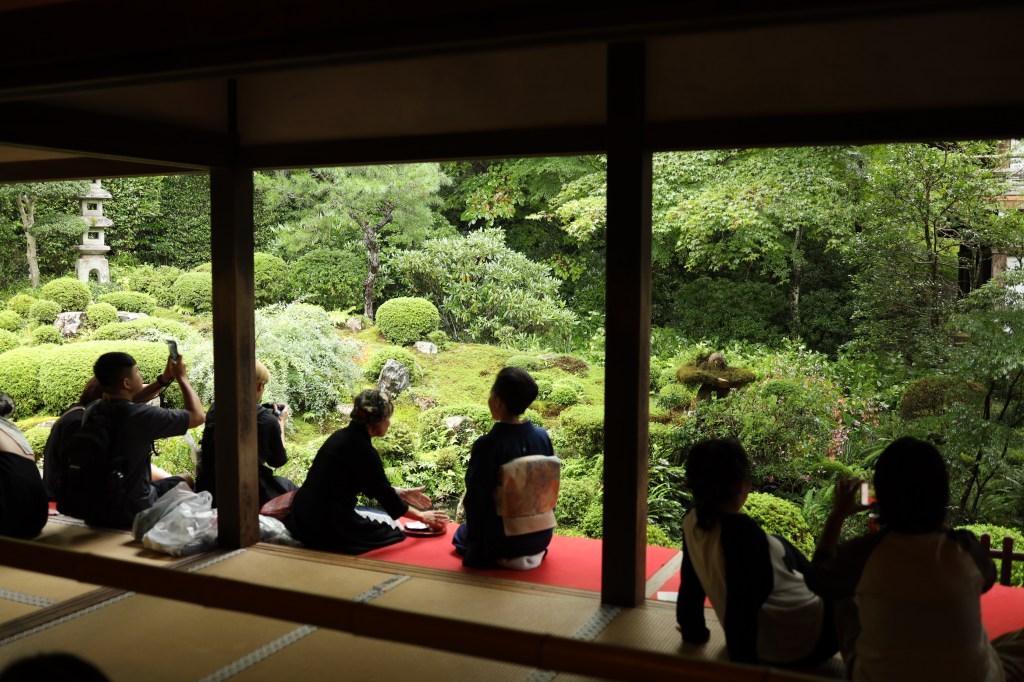
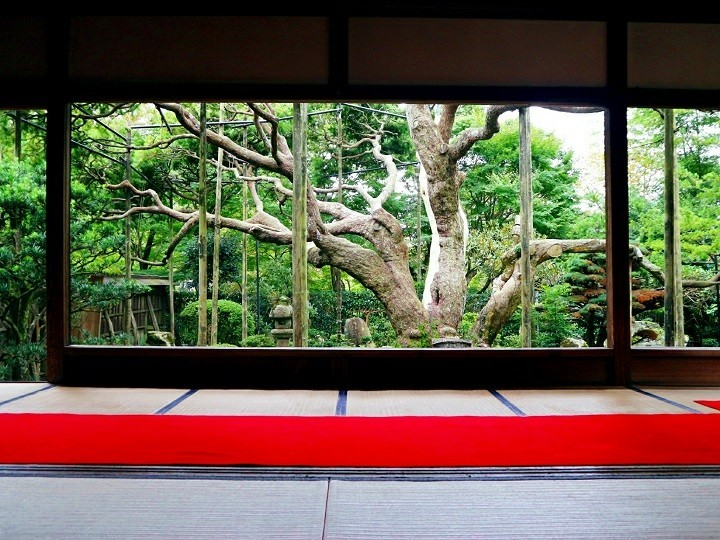
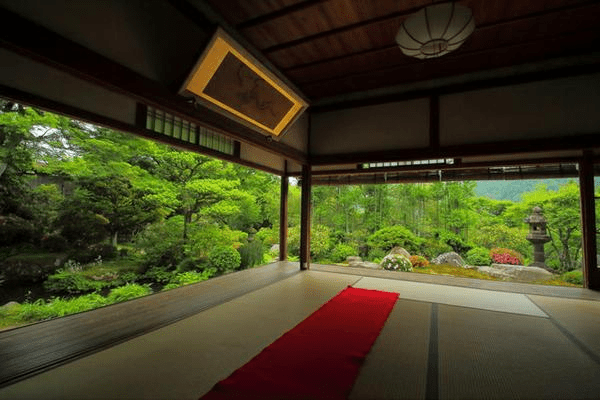
…you’ll come to an open space overlooking the garden — a breathtaking view framed perfectly by the wooden veranda. For an extra 500 yen, you can sit on the red carpet, enjoy a cup of tea, and take in the serene beauty of the traditional Japanese garden before you.
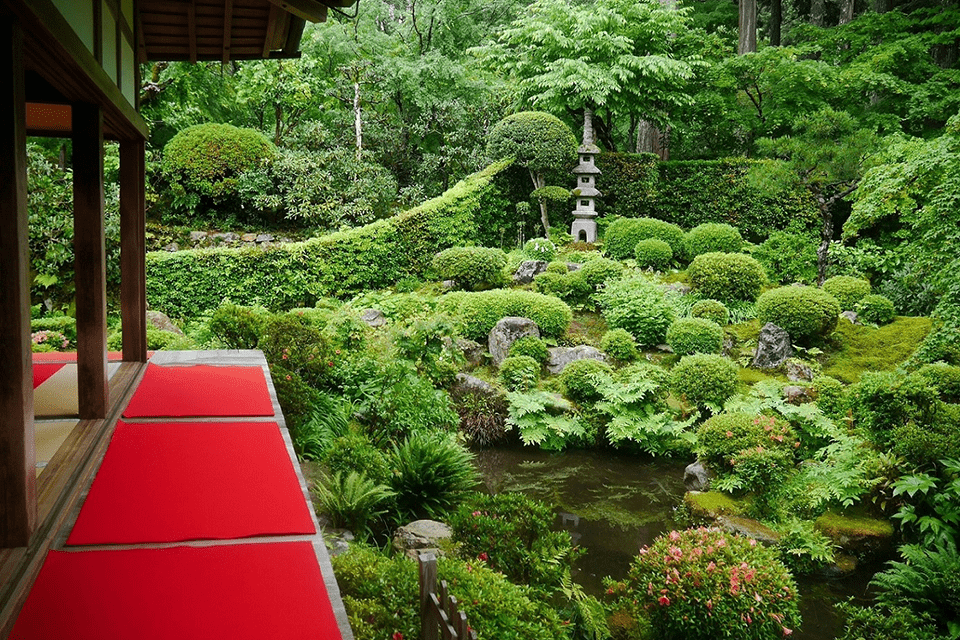
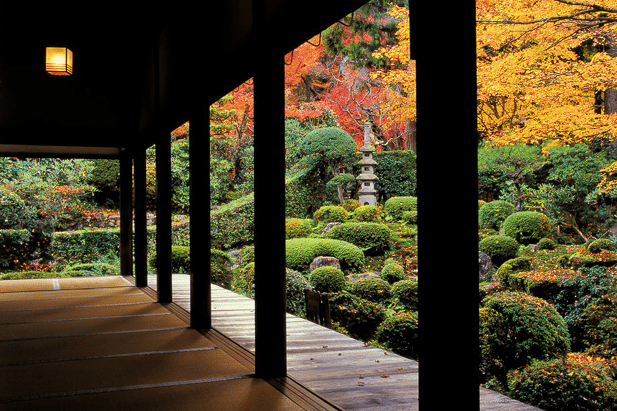
I was hoping for a peaceful, almost meditative moment — sitting quietly and gazing out over the Japanese garden. But in reality, it was a bit too crowded for that. Most visitors seemed focused on taking photos for social media, each trying to capture the perfect shot.
As I watched, I couldn’t help but think: maybe it would be even more meaningful if we paused for a moment, took just one quick photo, and then simply looked — really looked — at the beauty in front of us. Sometimes the best memories aren’t the ones we post, but the ones we truly see.
After passing through the garden and exiting Ōjō Gokuraku-in, the main hall of Sanzen-in, you’ll find yourself entering the heart of the temple’s famous moss garden — where the real magic begins.

Maybe it was because of the rain that day, but the moss seemed even greener — almost glowing with life. Between the tall, straight cedar trees stood temple buildings and stone lanterns, arranged so gracefully that the whole scene looked like a living ink painting.
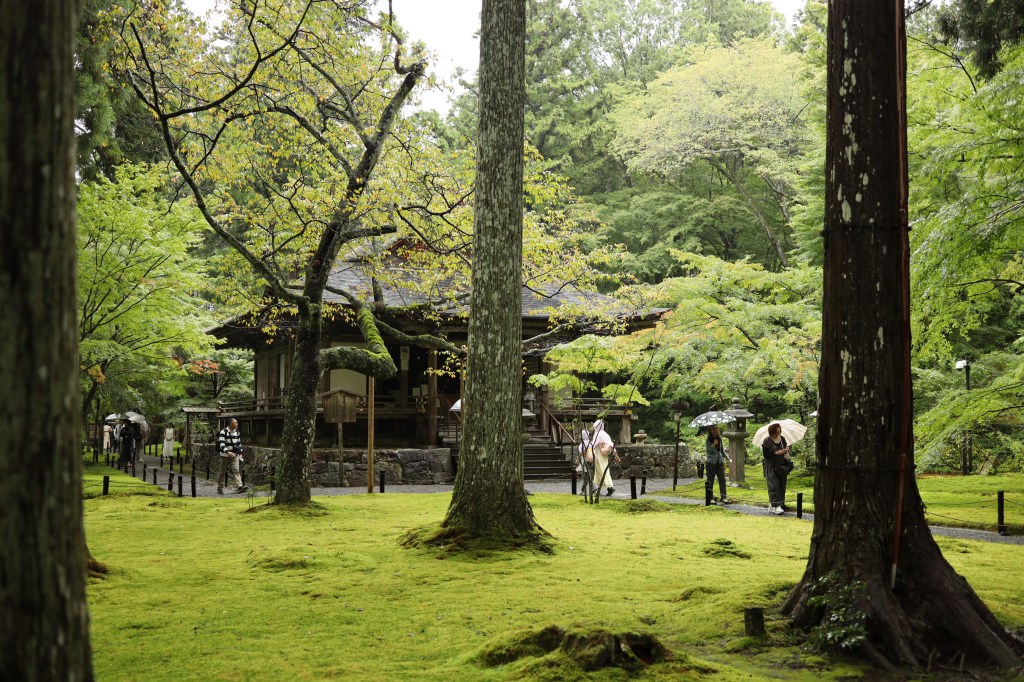
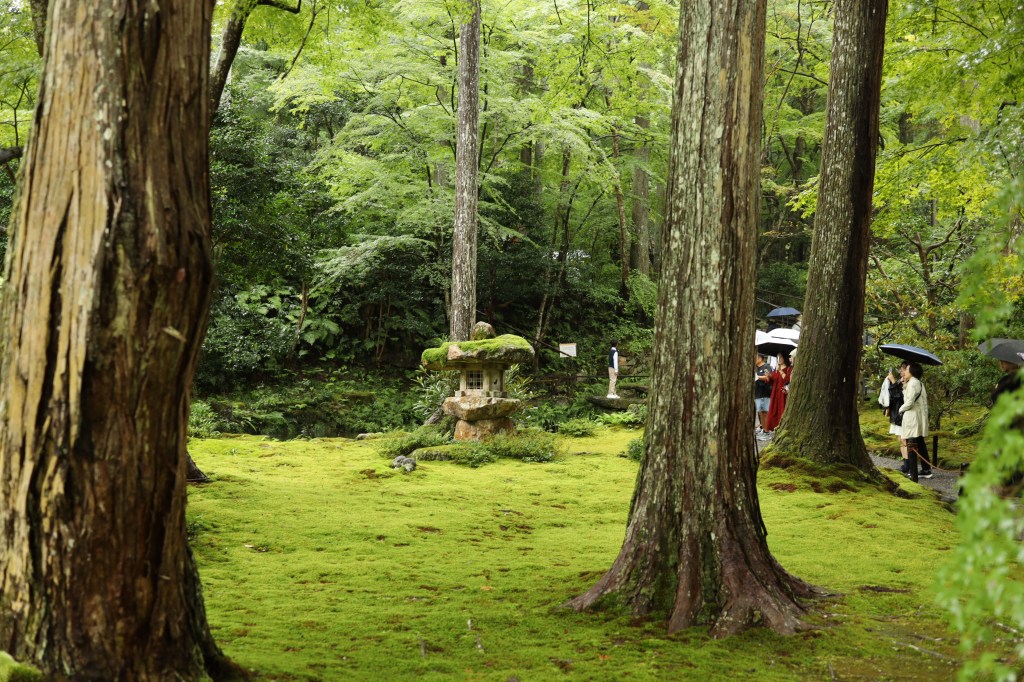

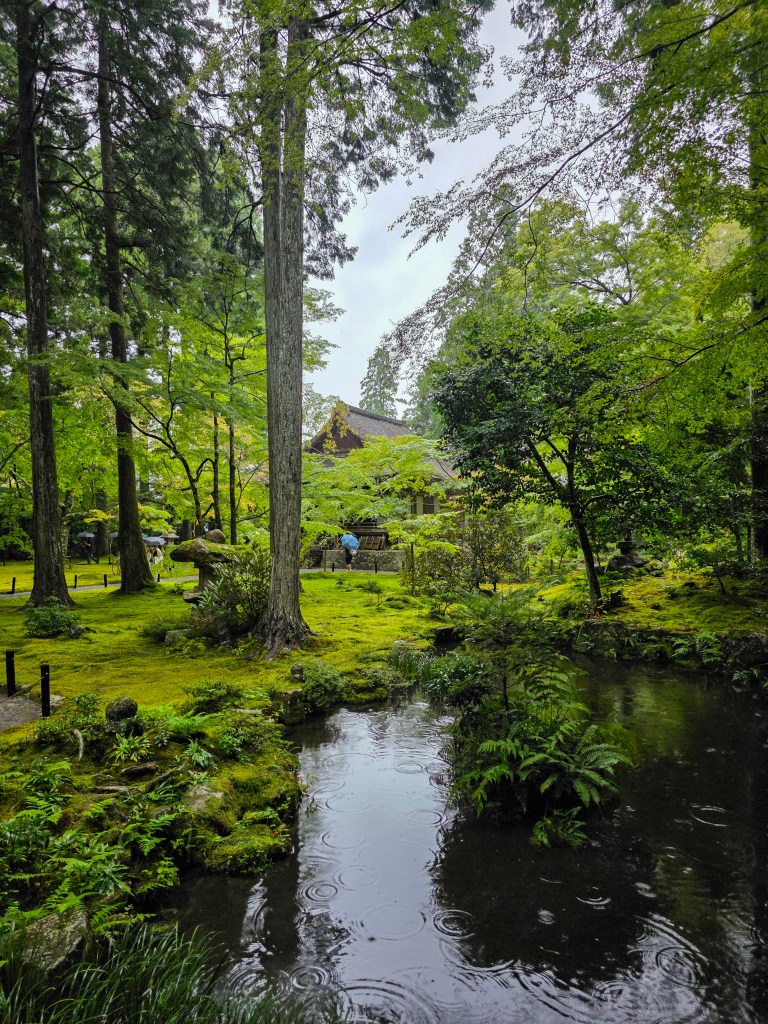
Raindrops were falling gently onto the pond, creating soft ripples that spread across the water. As I watched them, I found myself thinking — maybe it was actually a blessing to visit Ohara on a rainy day. The scene felt calm, timeless, and quietly beautiful… even if Lake Biwa didn’t quite work out for us.
If You’re Not Ready to Leave Yet — Jikkō-in & Hōsen-in Temples
It usually takes about 40 minutes to an hour to explore Sanzen-in, including the main hall and its gardens. After finishing your visit, if you keep walking along the stone path, you’ll come across two smaller temples — Jikkō-in and Hōsen-in.

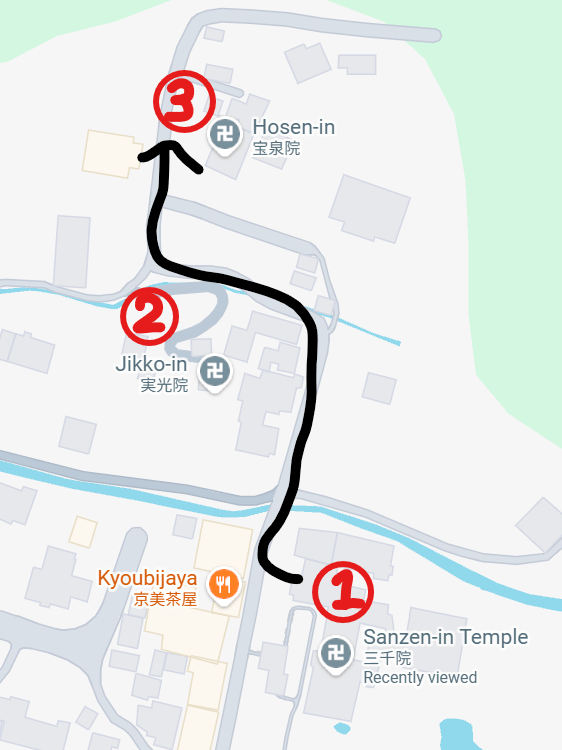
If you have some extra time, it’s definitely worth visiting these two temples as well. They’re smaller than Sanzen-in, but that also means fewer tourists — making it easier to sit back, relax, and quietly enjoy the beauty of a Japanese garden.
The highlight is the 700-year-old pine tree in the courtyard of Hōsen-in, a truly majestic sight that captures the timeless spirit of Ohara.
So that was our day in Ohara, the peaceful countryside village in northern Kyoto, and a visit to its three most famous temples. If you ever find yourself tired of the crowds and constant buzz of central Kyoto, spending a quiet day in Ohara might be just what you need — a perfect little escape to recharge and breathe in the calm.
 Places of East Asia
Leave a comment