When traveling around the Kansai region, most people focus on Osaka and Kyoto — and Nara often gets a little overlooked. But Nara is actually the heart of ancient Japan, and it’s a city you definitely shouldn’t skip.
Back in the 8th century, it was home to Heijō-kyō, the capital during the Nara period, and even today you can find countless temples, Buddha statues, and wooden structures designated as National Treasures or UNESCO World Heritage Sites.
Hōryū-ji: The Oldest Wooden Building in the World

Hōryū-ji is one of the most iconic temples from Japan’s Asuka period and is known as the country’s oldest surviving temple — as well as the oldest wooden structure in the world. It was originally built in 607 AD, and although it has been repaired and renovated many times over the centuries, it has miraculously stood for more than a thousand years without major damage. Its architectural style shows clear similarities to that of Korea’s Baekje period, making it an important historical reminder of the deep cultural exchanges between ancient Japan and Korea.
Although it’s a bit away from the main tourist area around Nara Park and Tōdai-ji Temple, Hōryū-ji is absolutely worth setting aside some time to visit.
Entering the temple grounds through the South Gate of Hōryū-ji.

On either side of the South Gate stand the Four Heavenly Kings, their fierce expressions full of authority. Their intimidating presence is said to ward off anyone who tries to enter the temple with impure intentions.
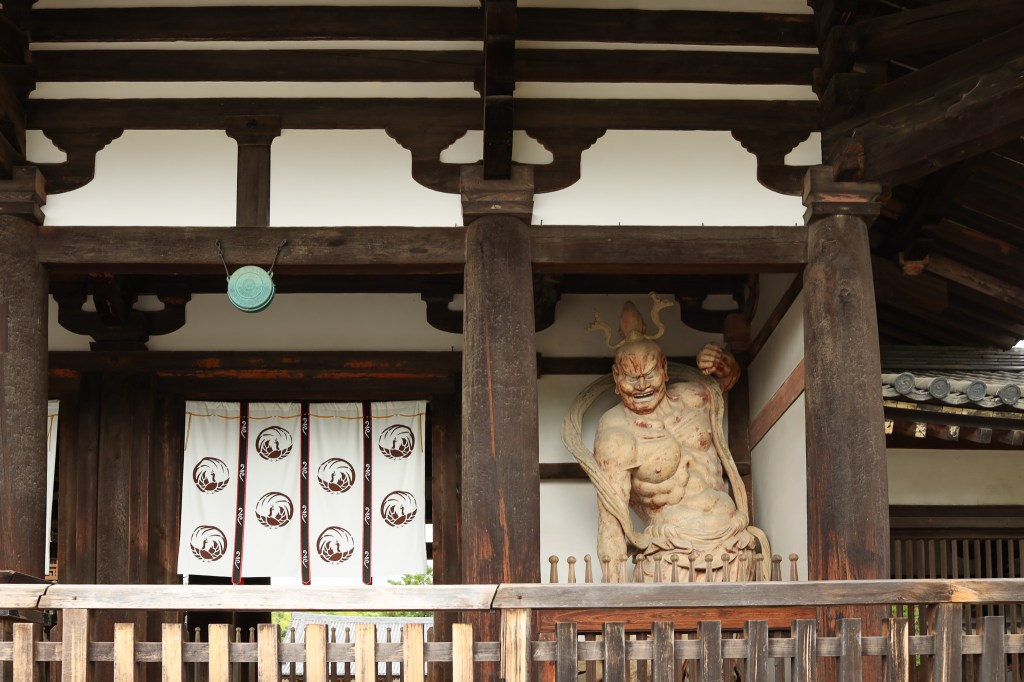
Once you step inside the temple grounds, you’ll see the Main Hall (Kondō) and the Five-Story Pagoda standing side by side. The Kondō is said to be the oldest wooden building in the world—and knowing that makes it feel even more awe-inspiring.
Inside the Kondō are some of Hōryū-ji’s most important Buddha statues, though photography is not allowed. It was quite dim inside, so it was hard to see every detail, but the space was filled with a sacred, almost mystical atmosphere that felt straight out of ancient Japan.
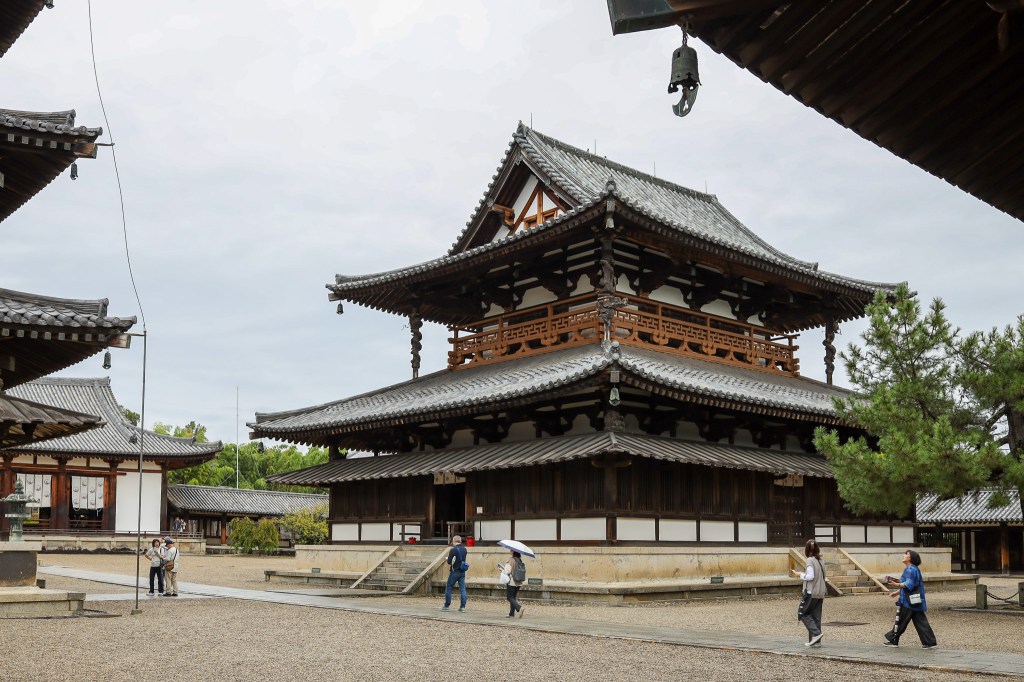
Next to the Main Hall stands the Five-Story Pagoda, which is also one of the oldest wooden pagodas in the world.

After passing through the Lecture Hall and taking a walk around the Western Precinct, I wrapped up my visit to Hōryū-ji.


Hōryū-ji is quite a large temple complex, with not only the Western Precinct (where the Main Hall and Five-Story Pagoda stand) but also an Eastern Precinct. The Eastern side is home to the famous Guze Kannon statue, which is said to reflect the artistic style of Korea’s Baekje period—another fascinating example of ancient cultural exchange between Japan and Korea. If you have time, it’s definitely worth a visit! (As for us… we were too hungry and decided to head out instead)

Strolling Through Naramachi: Experiencing the Nostalgic Charm of Old Japan
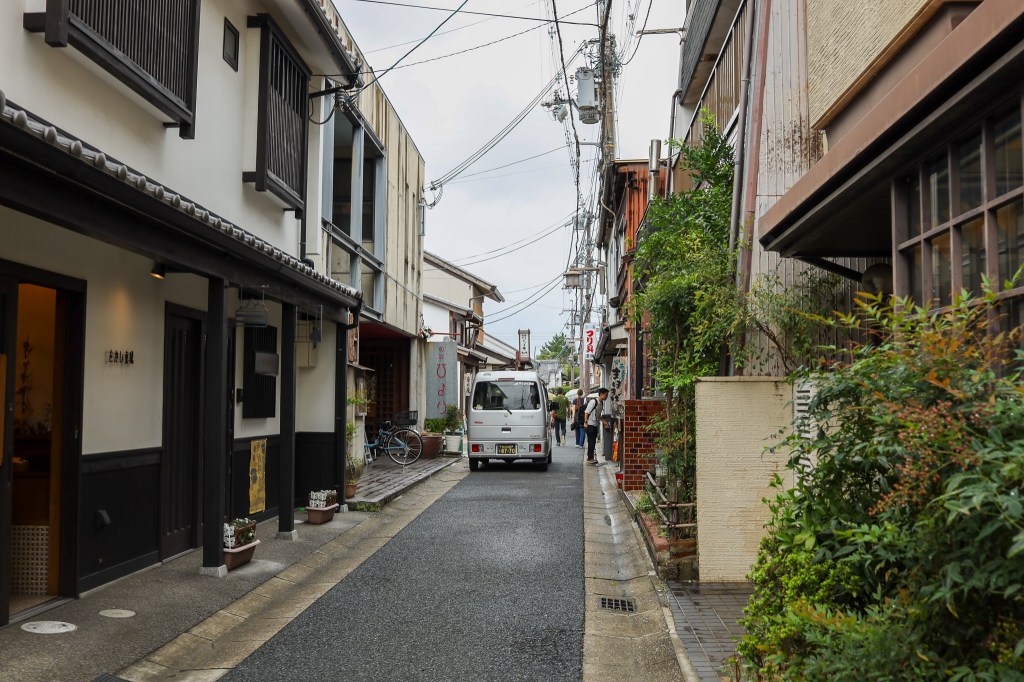
After visiting Hōryū-ji, we headed over to the Naramachi area for lunch. Naramachi is the oldest district in Nara, filled with traditional wooden houses from the Edo and Meiji periods. Walking through its narrow streets feels like stepping back in time to old Japan.
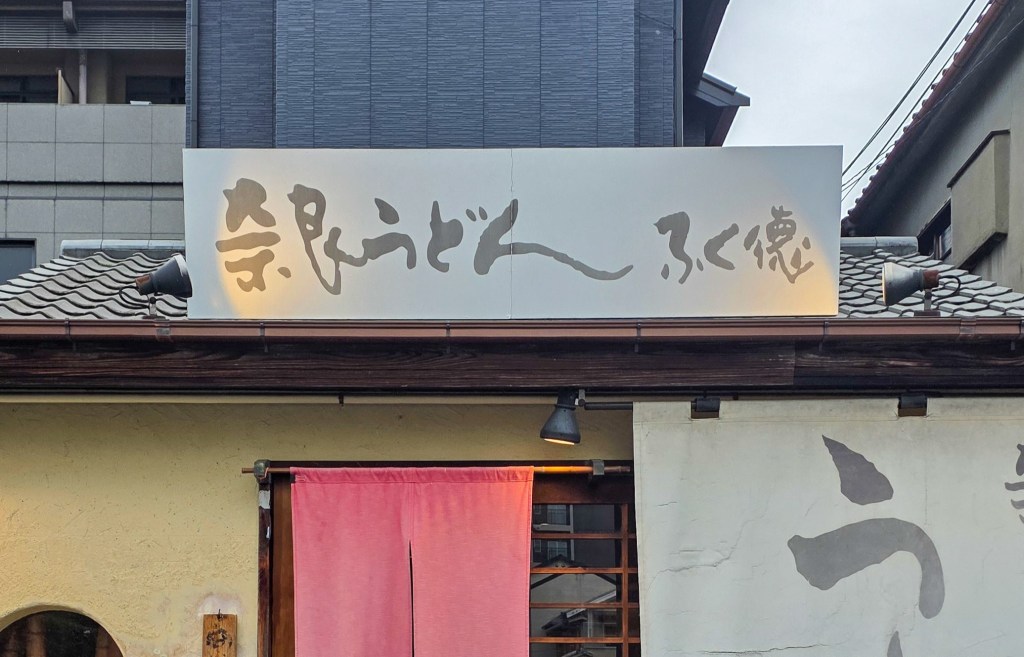
We had lunch at a noodle shop called Nara Udon Fukutoku. It’s a cozy spot specializing in udon, and when we arrived, they had just run out of hot broth—so we tried the cold udon instead. It was surprisingly refreshing and delicious!
After lunch, we took a leisurely stroll around Naramachi to walk off the meal and enjoy the atmosphere.

We stopped by Naramachi Monogatari-kan, a traditional Japanese house that’s been turned into a small museum. Inside, you can get a glimpse of what an old Japanese home looked like. From the outside, it seems pretty small, but once you step in, it’s surprisingly spacious—it must have belonged to a fairly wealthy family back in the day.

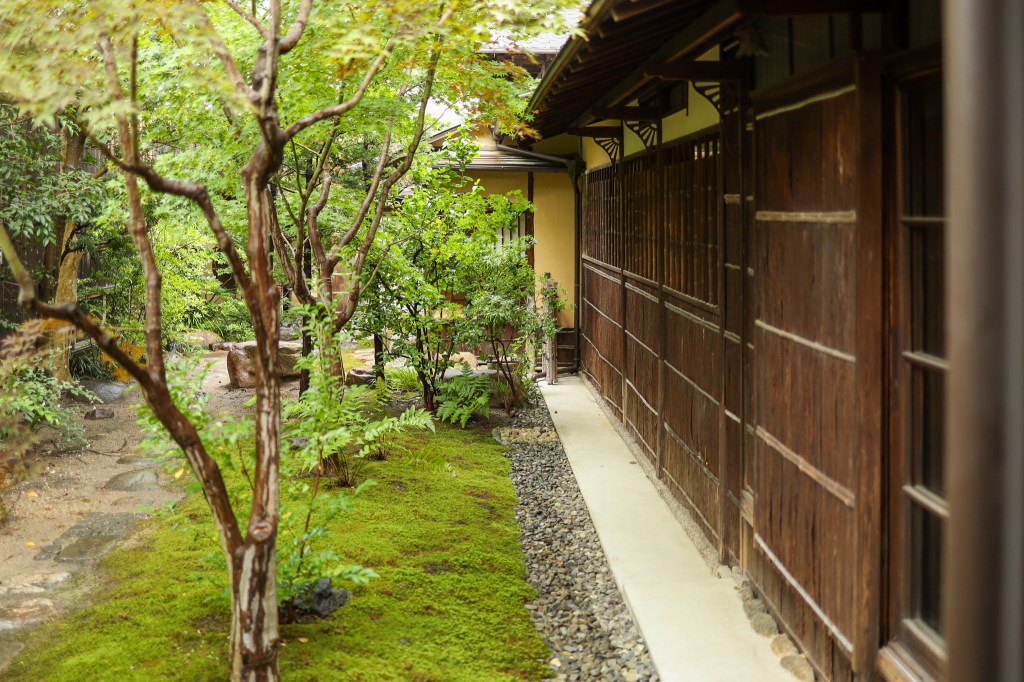
On our way out of Naramachi, we found a cozy-looking café and decided to stop by for some tea. There weren’t many tourists—mostly locals chatting and relaxing. It had such a peaceful, laid-back atmosphere, the kind of place where neighborhood regulars gather to unwind over a warm drink.

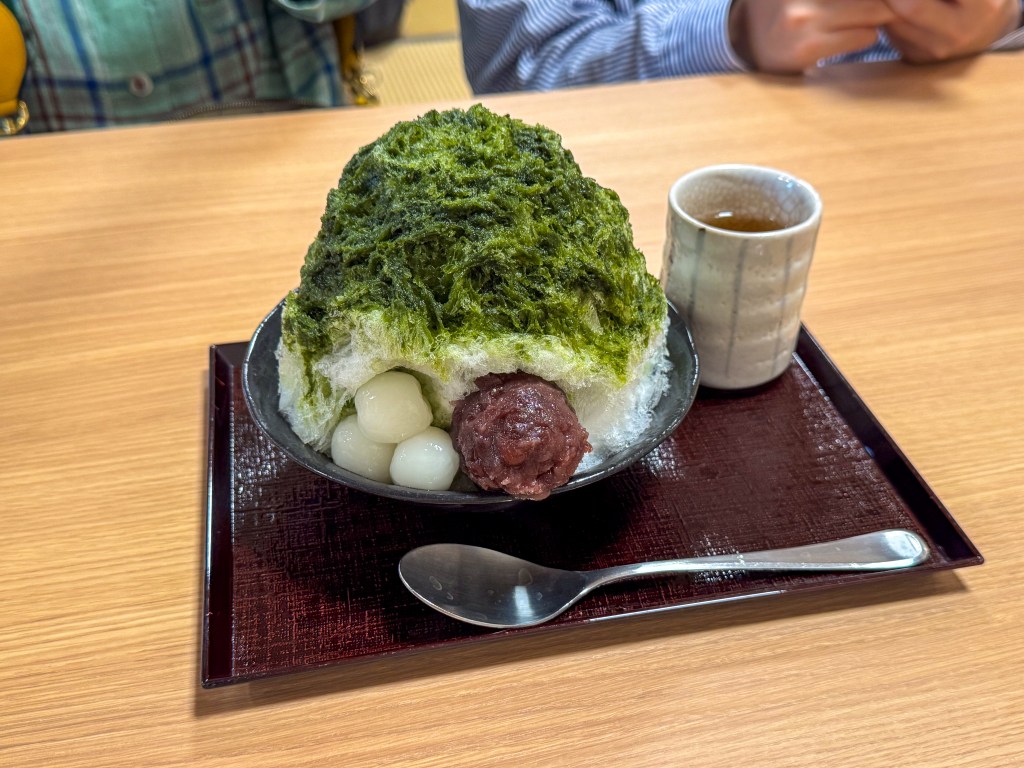
They had a “one order per person” rule, so since there were four of us, we had to order four desserts—which made the bill a bit pricey. But honestly, the matcha shaved ice was totally worth it. It was delicious!
Nara Deer Park – Watch Out for Deer Poop!
After a relaxing afternoon in Naramachi, we made our way to Nara’s highlight—Nara Deer Park. Compared to the calm atmosphere of Hōryū-ji and Naramachi, the park was packed with tourists! I guess that’s to be expected from one of Nara’s most famous spots.
Since ancient times, deer have been considered sacred animals in Nara—believed to be messengers of the gods and treated with great reverence. Today, around 1,200 deer live freely in Nara Park. But don’t be fooled by their cute faces… they can be surprisingly aggressive!

At the park’s kiosks and convenience stores, you can buy special deer crackers to feed them. But the moment you do—somehow, they know. Within seconds, deer start gathering in front of the shop, waiting for you to come out. And as soon as you step outside, they charge straight toward the crackers, bumping into people and chasing you down. Even if you run, they keep following you!!!

To make things worse, the park grounds were literally covered with deer poop—like a minefield. All four of us ended up stepping in it… a truly tragic moment. While we were busy cleaning our shoes in a nearby restroom, we completely missed the entry time for Tōdai-ji Temple (it closes at 5 PM).
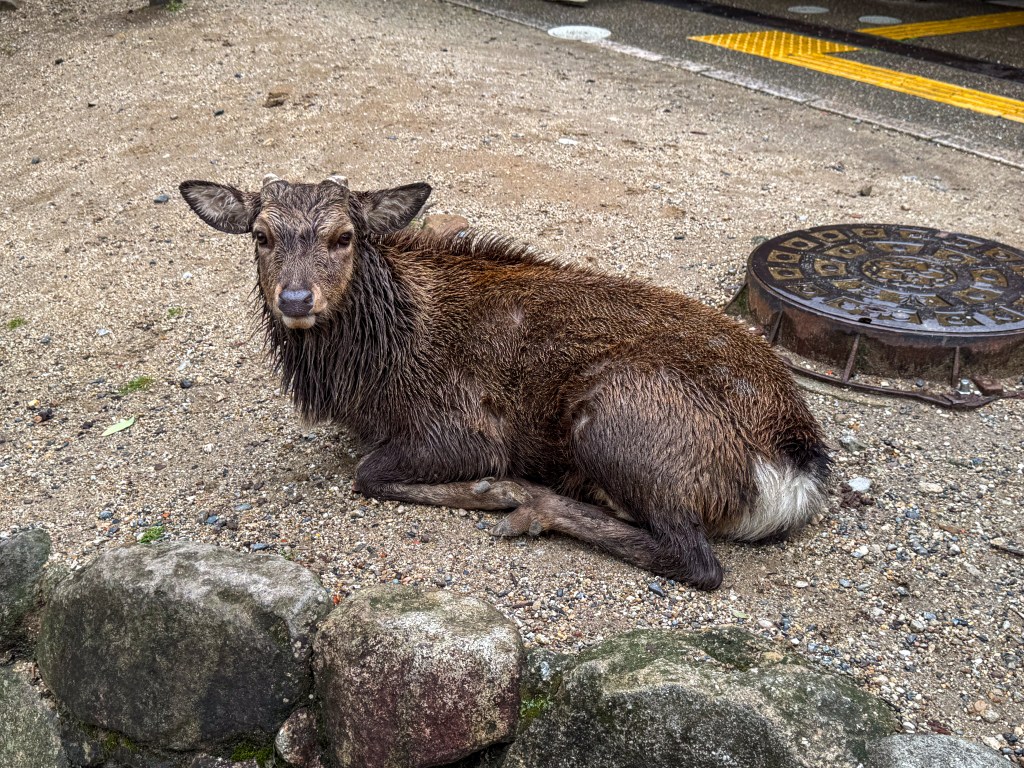
From the world’s oldest temple to a park home to over a thousand deer, Nara is a city full of rich history and unique travel experiences. While Nara Park is definitely the most popular spot among tourists, I personally prefer quieter places—so I’d highly recommend visiting Hōryū-ji if you want a more peaceful and authentic taste of Nara.
 Places of East Asia
Leave a comment